
Wow. 40 years. That’s a long time. I was 6 years old when the Atari ST was released. Makes me feel even older when I look at it like that. Yet it doesn’t seem that long ago that I was seeing Atari ST games in magazines and being somewhat jealous of the way it’s games looked so much better than my humble Spectrums did.
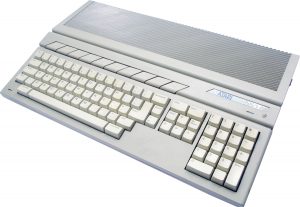
Now, the Atari St was born out of a desire by Jack Tramiel to, well lets be blunt here, fuck Commodore over. You see, he had been ousted from Commodore in a somewhat acrimonious series of events. He knew that the Amiga was headed to market, and he wanted to be the first to get a 68000 based home computer into stores. Hence, the Atari ST.
Now, Atari did beat Commodore to the punch. They arrived in stores first, and at a significantly lower price point: $1199 with a colour monitor & 1mb RAM, compared to the Amiga which launched at $1795.
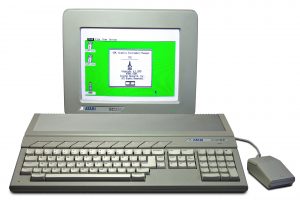
How did Atari manage this? Well, unlike the Amiga with it’s custom Blitter graphics and PAULA audio hardware, the ST was a much simpler machine, which naturally kept costs down. And in the early years of both systems lives, this made the ST the more popular machine for those upgrading from the existing 8bit machines out there. This was especially noticeable in the games released for both systems, where the Amiga versions were often quick & dirty ports of the ST game with none of the custom hardware used to enhance anything.
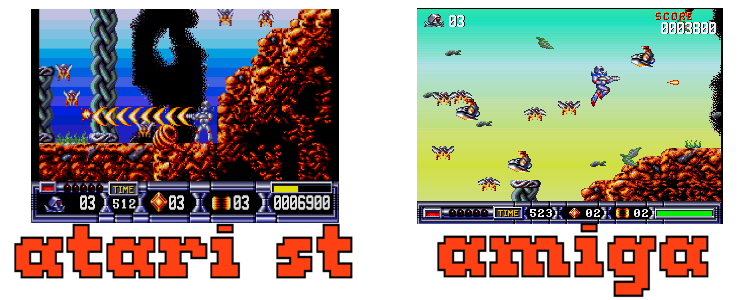
Eventually, Commodore brought the price of the Amiga down, and thanks to some canny marketing overtook the ST. This didn’t kill the ST off though, oh no. It still had a good few years left, but despite some attempts by Atari to make the system more competitive with the Amiga (such as the enhanced Atari STE system), Commodore kept stretching their lead in the market. Even the price dropping from over $1000/£1000 at launch to under $300/£300 by 1989 couldn’t get the system back into the lead (despite the Amiga usually costing around $100/£100 more).
Eventually, the ST market died off, as gamers either moved to the Amiga, or one of the new 16bit consoles on the market (the Mega Drive and SNES, primarily). But the ST did live on, especially in the hands of musicians, who loved the machine for it’s incredibly impressive MIDI features. Indeed, the ST was a mainstay of many a recording studio well into the early 2000s, such was it’s abilities.
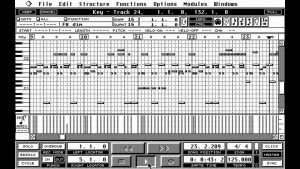
But the ST is now long dead. And it’s a shame. It was a low cost 68000 trailblazer. The 1040ST model with a monochrome monitor was the first home computer to offer 1mb of RAM for under $1000 (a significant barrier to break through). It placed powerful music production capabilities in the hands of home users for the first time (the legendary Cubase suite was first launched on the ST). And it opened the door to the 16bit generation for thousands, if not millions of gamers.
Happy middle age, Atari ST. You deserve it.